How Much Exercise Does a Senior Dog Need?
Updated November 6, 2026 · 6 min read
The short answer
Most senior dogs still need exercise every day, but in shorter, gentler and more frequent sessions than when they were younger. The right amount depends on your dog's size, weight and health, so ask your vet to help set it, and judge by how your dog feels afterward and the next morning. Mix easy walks on soft ground, low-impact activity like swimming, a gentle warm-up, and plenty of sniffing and brain games.
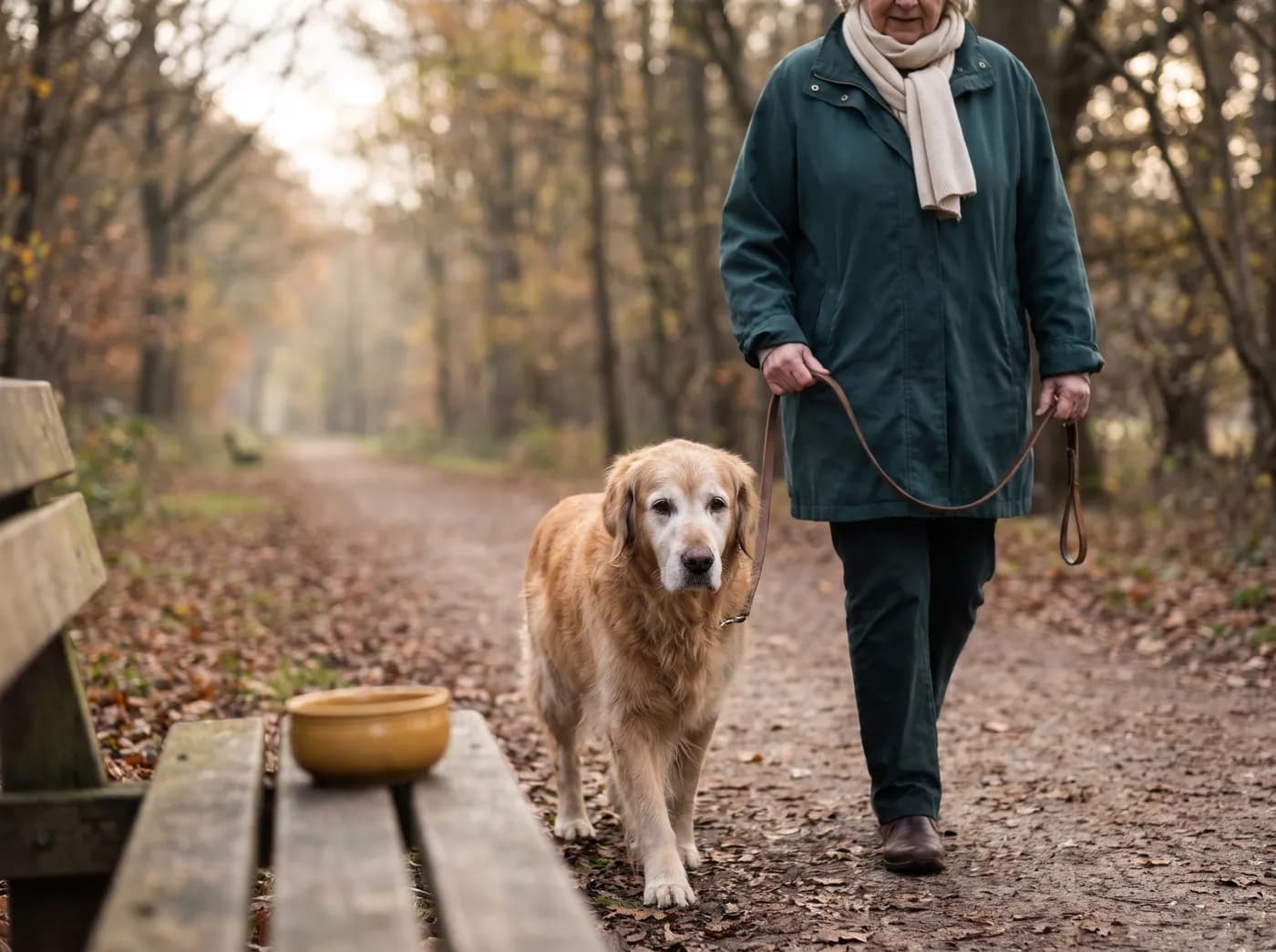
When does a dog count as a senior?
There's no single birthday. The American Animal Hospital Association's (AAHA) guidelines define a senior dog as one in the last 25% of their estimated lifespan. Large and giant breeds tend to have shorter lifespans, so they reach their senior years sooner than small dogs.
That means a 7-year-old Great Dane and a 12-year-old Chihuahua can both be seniors. More telling than the number is how your dog moves and recovers. Stiffness after rest, slower walks or longer naps after a busy day are all signs that their exercise needs are changing.
How much exercise does a senior dog need each day?
There's no single figure that fits every older dog. The American Kennel Club's (AKC) guidance is to adjust activity to what your dog can comfortably do, and to talk to your vet first so the plan suits their current fitness.
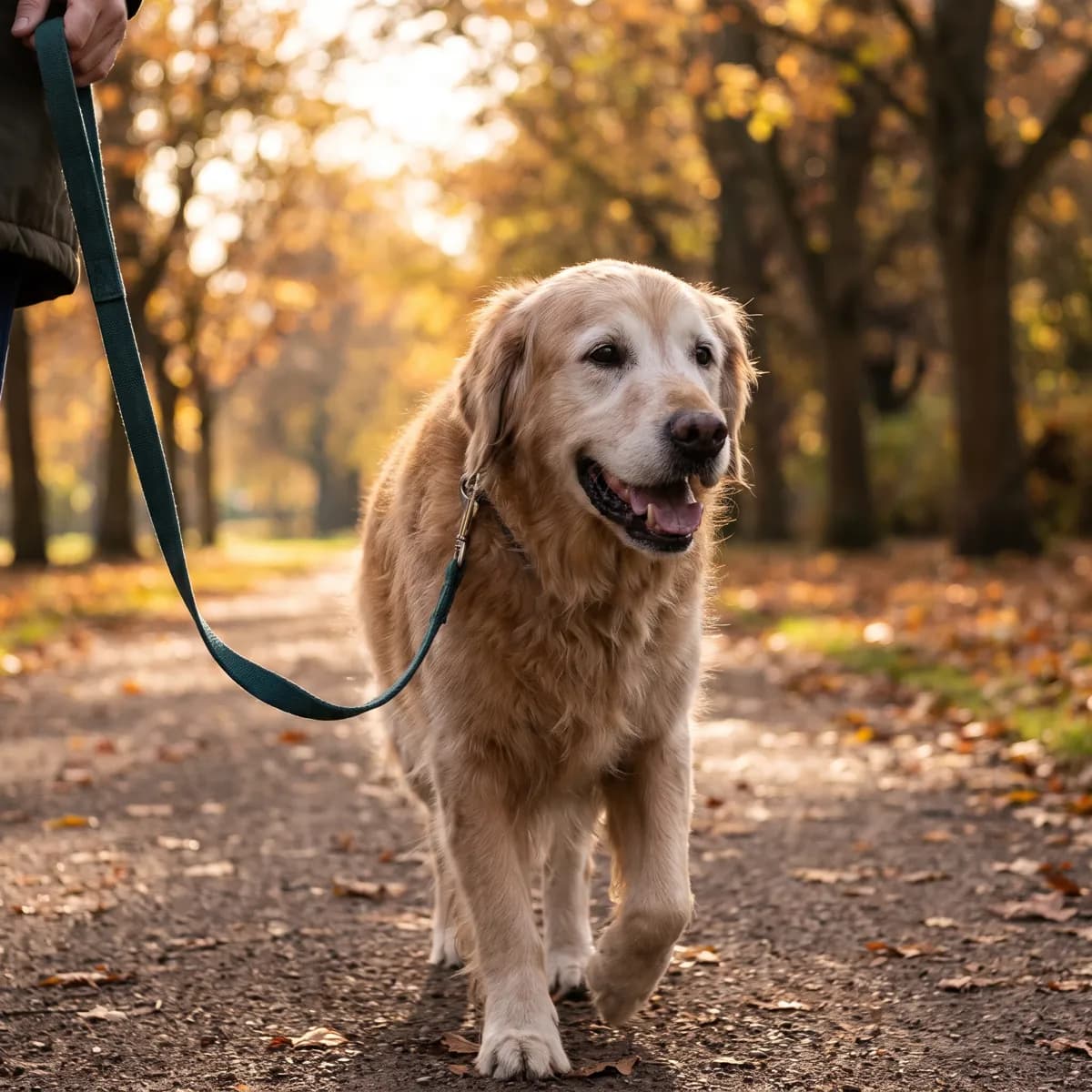
A practical approach: keep the daily activity your dog enjoys, but split it into two or three shorter outings instead of one long one. Short, regular walks keep joints moving and muscles working without the soreness a long weekend hike can bring.
A typical day for many seniors might be a short morning walk, a sniffing game or food puzzle at midday, and an easy evening stroll. Adjust the length of each outing to your dog, and keep the routine steady from day to day rather than saving it all for the weekend.
Use the next morning as your guide. If your dog is stiff, slow to get up or reluctant to go out the day after, the previous day was too much. AKC suggests shortening your outings if your dog seems stiff afterward.
Regular activity also helps keep your dog lean, alongside the right amount of food, and that matters. In a lifelong study of Labrador Retrievers published in the Journal of the American Veterinary Medical Association, the dogs fed to stay leaner had a longer median life span than their pair-mates.
What are the best low-impact exercises for older dogs?
Pick activities that keep your dog moving without sudden twists, jumps or pounding:
- Easy leash walks on soft ground. AKC calls grass and sand ideal surfaces and warns that asphalt and gravel, especially when warm, can be hard on paw pads.
- Swimming or walking in shallow water. AKC notes that swimming is very easy on the joints. Use a dog life vest and choose calm water with an easy way in and out.
- Gentle strength work at home. AKC describes simple moves like sit, down and stand on a non-slip surface, done every other day.
- Calm play at your dog's pace, such as rolling a ball along the ground instead of throwing it high, or a slow game of find-it.
- Skip repetitive jumping, sharp turns, racing up stairs and long fetch sessions, which put sudden strain on older joints.
How should a senior dog warm up and cool down?
Older muscles and joints do better with a gentle start. AKC's at-home exercise guide for seniors recommends warming up and cooling down with a five-minute leash walk before and after exercise.
Start every walk at a slow stroll and let your dog pick up the pace when they're ready. End with a few minutes of easy walking and sniffing rather than a dash to the door.
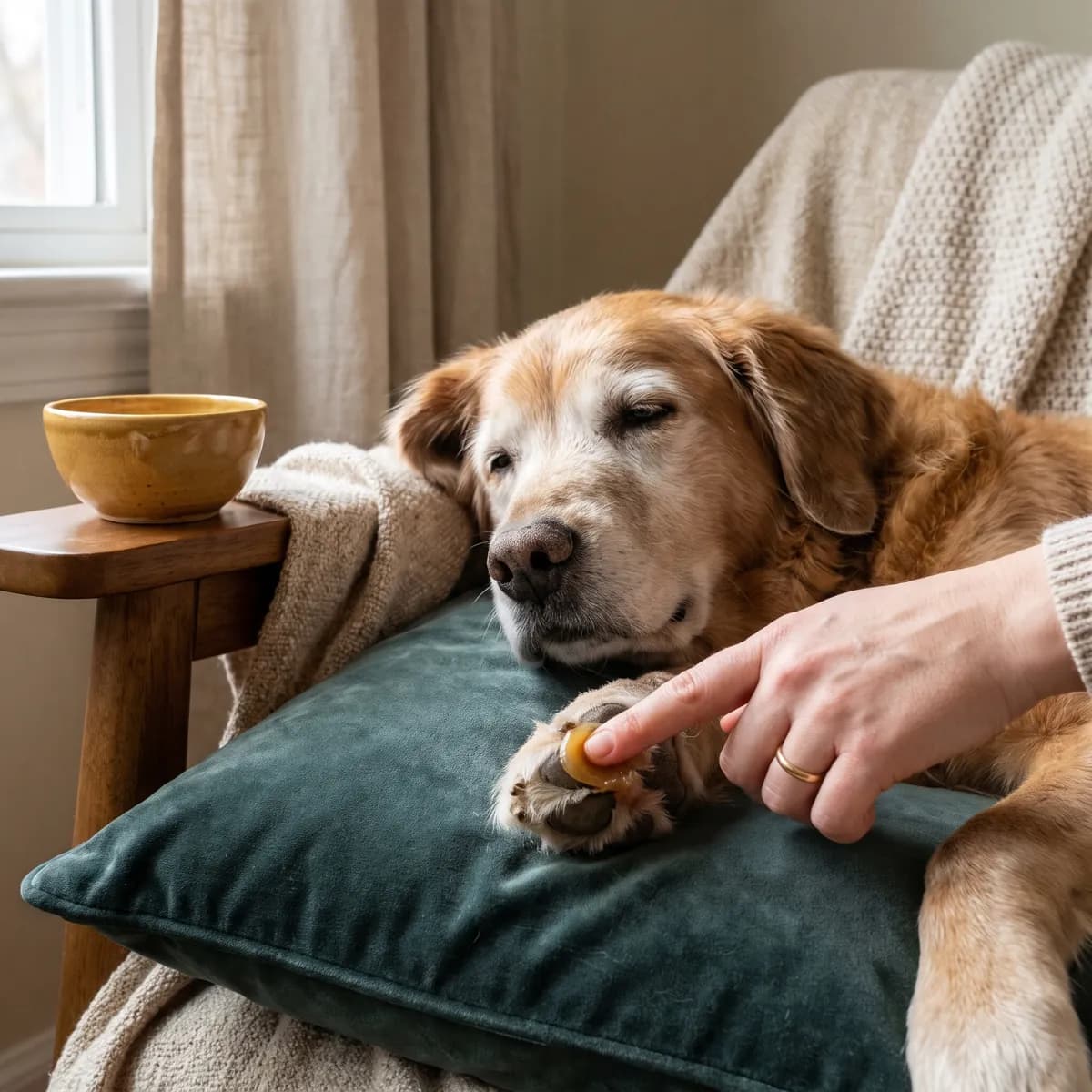
Plan around the weather. AKC notes that older dogs are more sensitive to heat and cold, so walk in the cooler parts of the day in summer and keep winter walks shorter. Check paws after outings, and if pads look dry, a paw balm helps moisturize and protect them from hot pavement, ice and salt.
Does mental exercise count for senior dogs?
Yes, and it becomes more valuable as walks get shorter. Using their nose, solving a puzzle or learning something new tires a dog out in a different way, with little strain on the joints. AAHA's senior care guidelines include exercise, new toys and cognitive games in the enrichment they describe for older pets.
- Sniff walks: let your dog set the pace and stop to sniff as long as they like. A slow, sniffy walk gives their brain a workout even when their legs can't go far.
- Food puzzles and snuffle mats: serve part of a meal this way so they work for it.
- Scatter feeding: toss a handful of their kibble on a rug or the lawn and let them search.
- Short training sessions: a few minutes practicing old cues or learning a new one, with rewards.
- New places: a quiet walk somewhere different gives them lots to smell and see.
What are the signs a senior dog is overdoing it?
Older dogs often keep going to please you, so it's up to you to call time. If you notice any of these, head home slowly, offer water, let your dog rest somewhere cool, and make the next outing shorter:
- Lagging behind, lying down on the walk, or refusing to go on
- Heavy panting that doesn't settle with rest
- Limping, stiffness or a change in the way they walk
- Soreness or trouble getting up the next morning
- Worn, red or sore paw pads
- Stumbling, wobbling or seeming confused
How can I support an active senior's joints?
AKC puts it simply: if something is too painful or difficult for your dog, don't do it. Within that limit, steady daily movement, a lean weight, trimmed nails and non-slip rugs at home all help an older dog stay active.
Some owners also add a daily joint supplement. Soft chews with glucosamine, chondroitin and MSM are made to support hip and joint health and comfortable movement. Ask your vet first, especially if your dog takes medicine, and follow the label.
From the Keep Moving shelf
Common questions
›How long should I walk my senior dog?
There's no single right length. Many older dogs do better with two or three shorter walks a day than with one long one, at a pace they set. Start each walk with a few minutes of slow strolling, and judge by the next morning: if your dog is stiff or reluctant to go out, shorten the walks. Your vet can help set a target for your dog.
›Is it OK for an old dog to skip walks?
Rest days are fine when your dog is tired or sore, but most seniors still benefit from some gentle movement every day. Regular activity keeps joints moving, muscles working and weight in check. On days your dog doesn't want to walk far, try a short stroll, a sniffing game or a food puzzle. If your dog regularly refuses walks, check in with your vet.
›Is swimming good for older dogs?
For many older dogs, yes. The American Kennel Club notes that swimming is very easy on the joints, which makes it a good low-impact option. Use a dog life vest, choose calm water with an easy way in and out, keep sessions short, and dry your dog well afterward. Ask your vet first if your dog has a heart or breathing condition.
›Should senior dogs still play fetch?
Gentle fetch can be fine, but long sessions with fast sprints, sudden stops and high jumps put a lot of strain on older joints. Roll the ball along the ground instead of throwing it high, keep sessions short, and play on grass rather than hard or slippery surfaces. Stop if your dog limps, lags or is stiff the next day.
›How do I know if my senior dog is getting enough exercise?
A dog who gets the right amount usually settles well after activity, sleeps soundly, keeps a steady weight and is happy to head out again the next day. Restlessness, weight gain or boredom can mean they need a bit more gentle activity or brain games. Stiffness or soreness the next day means it was too much. Your vet can help find the balance.
Not sure where to start?
Take the 60-second quiz to see your dog's age in human years and get a daily routine built around them.
Take the dog age quizSources
- How to Provide Your Senior Dog With Proper Exercise (American Kennel Club)
- Three Easy At-Home Exercises for Senior Dogs (American Kennel Club)
- 2023 AAHA Senior Care Guidelines for Dogs and Cats (Journal of the American Animal Hospital Association)
- Effects of diet restriction on life span and age-related changes in dogs (Kealy et al., JAVMA, 2002)
These statements have not been evaluated by the Food and Drug Administration. Kennara products are not intended to diagnose, treat, cure or prevent any disease, and they don't replace veterinary care.