Probiotics for Older Dogs: What to Know About Digestion
Updated November 6, 2026 · 6 min read
The short answer
Probiotics are live beneficial microorganisms, mostly specific strains of bacteria, that support healthy digestion and gut balance when given in adequate amounts. For an older dog they fit best into a steady food routine: introduce any new food or supplement slowly, follow the label, and choose products made for dogs. Diarrhea, vomiting, weight loss or a lost appetite are signs to call your vet, not to try a supplement first.

What are probiotics?
Probiotics are live microorganisms that offer a benefit to the body when given in adequate amounts. That's the definition agreed by an international panel of scientists, the International Scientific Association for Probiotics and Prebiotics, and it's the one most researchers use.
Your dog's gut already holds a large community of microbes that help break down food. Cornell's Riney Canine Health Center describes probiotics as beneficial microorganisms that live in your dog's intestines, and prebiotics as the fiber that feeds them.
Probiotics are different from digestive enzymes. Enzymes such as amylase, protease and lipase help break down the starches, proteins and fats in food. Some products combine enzymes, prebiotics and probiotics in one chew.
Why might digestion change in older dogs?
As dogs age, many owners notice a pickier appetite, softer stools now and then, or a tummy that reacts more to change. Older dogs may also eat, move and drink less than they used to, and all of that affects digestion.
A change of food, new snacks, medicines, stress such as boarding or a move, and scavenging on walks can all upset the balance too. Some of these are normal ups and downs. Others are signs of a medical problem, which is why it helps to know the difference.
Get to know your dog's normal: how often they go, what their stool usually looks like, and how eagerly they eat. A quick note on your phone makes small changes easier to spot and easier to describe to your vet.
How do owners use probiotics for an older dog?
If you and your vet decide to try a probiotic, a few habits help:
- Choose a product made for dogs, with directions written for dogs.
- Read the label. Cornell suggests it should include an expiration date, the exact species, the number of microorganisms and a guarantee for the number of live organisms.
- Follow the label for how much and how often, and mix it into food as directed.
- Give it at the same meal each day so it becomes part of the routine and is easy to remember.
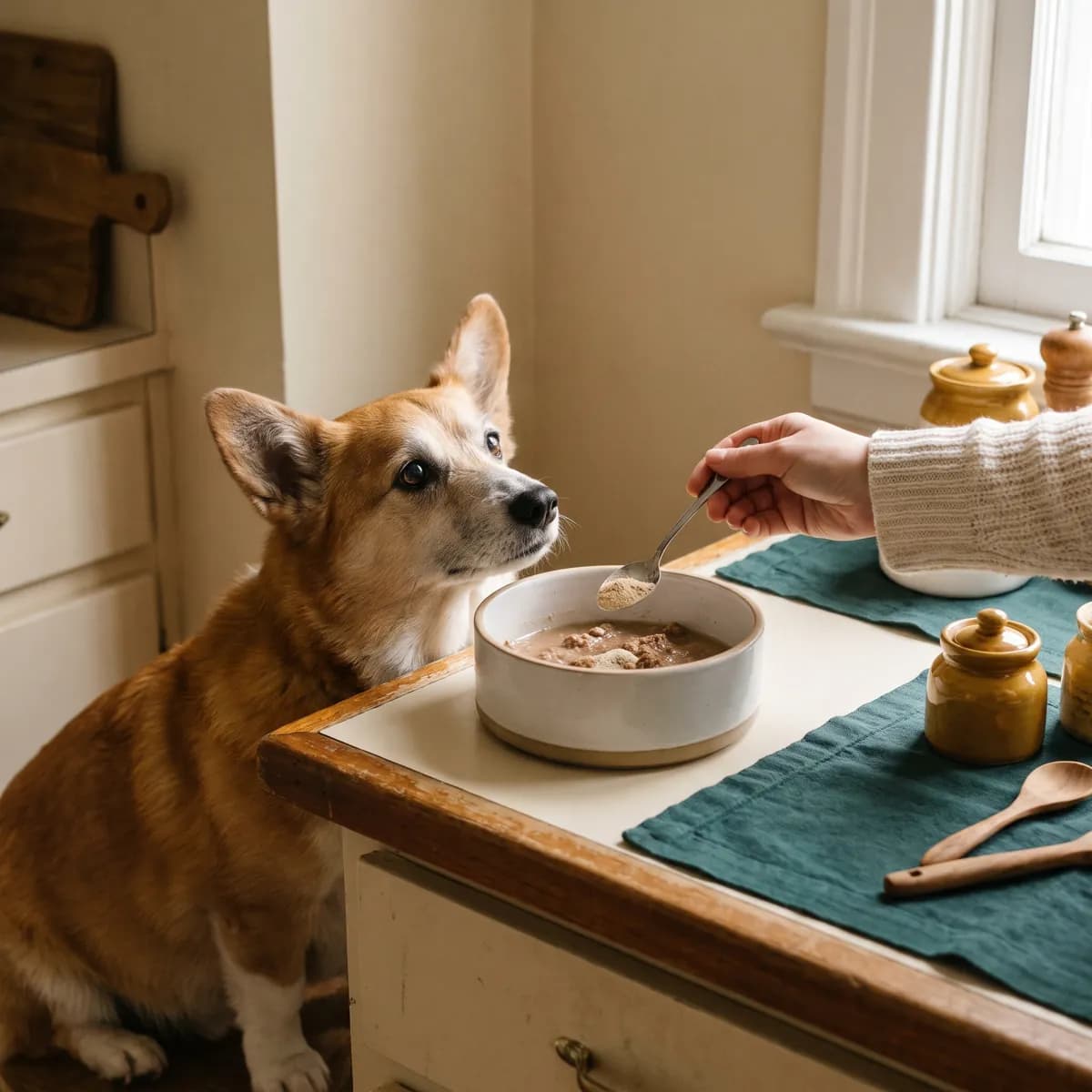
- Pick a format your dog takes happily. Powders mix into food, while chews can be given by hand like a snack.
- Store it as the label says. VCA Animal Hospitals advises protecting probiotics from light, moisture and heat.
- Tell your vet if your dog is on antibiotics or antifungals, which VCA notes may reduce how well probiotics work, or if your dog is ill or has a weakened immune system.
What should I watch for after starting a probiotic?
Give it consistently and keep a short note of stool quality, appetite and gas for a few weeks before you judge. Firm stools that are easy to pick up are what you're aiming for.
VCA lists mild gas or stomach upset as possible side effects. If they don't settle, or you see signs of an allergic reaction such as facial swelling, a rash or trouble breathing, stop the product and call your vet.
VCA also points out that the FDA does not review these products for safety or effectiveness before sale, so the maker is responsible for an accurate label. Buy from a company that lists its strains and gives you a way to contact it.
How do I introduce a new food or supplement slowly?
An older tummy usually copes best with gradual change. That goes for a new food, a new supplement and new snacks.
For food, the American Kennel Club (AKC) suggests a switch over about a week: roughly a quarter new food on day one, half by day three, three-quarters by day five, and all new food by day seven. Dogs with sensitive stomachs may need a longer transition.
Add one new thing at a time, so if your dog's stool or appetite changes, you know what caused it. If your dog shows stomach upset during a switch, slow down, and if it continues even with a gradual change, check with your vet.
What daily food routine supports healthy digestion?
Older dogs may do better on a food suited to their life stage or health. Your vet can tell you whether a senior formula or a different food makes sense, and how much to feed.
Beyond what's in the bowl, a predictable routine is one of the simplest ways to support an older dog's digestion:
- Feed at the same times every day, in a calm spot away from busy foot traffic.
- Ask your vet whether splitting the daily food into more, smaller meals suits your dog.
- Keep fresh water available, and notice if your dog drinks much more or less than usual.
- Limit table scraps and rich, fatty foods, which commonly upset dogs' stomachs.
- Keep snacks consistent rather than trying a new one every week.
- Watch what your dog picks up on walks, and keep trash and compost out of reach.
When is a probiotic not the answer?
A probiotic is daily support for a healthy gut. It is not a fix for a dog who is unwell. If your dog has diarrhea, is vomiting, is losing weight, refuses food, or seems tired or in pain, call your vet before adding anything new.
Older dogs often have other health conditions or take medicines, so changes in digestion deserve a closer look. Don't give human stomach or anti-diarrhea medicines unless your vet tells you to, since some are unsafe for dogs.
When you call, have the details ready: when it started, how often it happens, what the stool or vomit looks like, any food changes, and anything your dog may have eaten on a walk. A photo helps too.
From the Digest Easy shelf
Common questions
›Are probiotics good for senior dogs?
Many owners give probiotics to support healthy digestion and gut balance in older dogs. They fit best as daily support for a dog who is generally well, not as a fix for a dog with symptoms. Choose a product made for dogs, follow the label, and check with your vet first if your dog takes medicines, is ill, or has a weakened immune system.
›How long should I try a probiotic before deciding?
Give it every day as the label directs, and watch your dog's stool, appetite and gas for a few weeks before you judge. Some owners notice changes sooner, others see little difference. Talk to your vet about what to expect for your dog, and stop and call them if you see ongoing stomach upset, vomiting or diarrhea.
›Can I give my dog human probiotics or yogurt?
It's better to use a product made for dogs, with directions written for dogs. Human probiotics are formulated and labeled for people, and some flavored yogurts contain sugar or sweeteners such as xylitol, which is toxic to dogs. Many dogs also don't digest dairy well. Ask your vet before sharing anything from your own fridge or medicine cabinet.
›What is the difference between probiotics, prebiotics and digestive enzymes?
Probiotics are live beneficial microorganisms. Prebiotics are the fibers that feed the helpful microbes already in the gut. Digestive enzymes, such as amylase, protease and lipase, help break down the starches, proteins and fats in food. Some products combine all three. Follow the label and ask your vet which approach suits your dog.
›Can my dog take probiotics with antibiotics?
Ask your vet first. VCA Animal Hospitals notes that antibiotics and antifungals may reduce how well probiotics work, so your vet may suggest a particular timing or a specific product. Tell your vet about every supplement your dog takes whenever a new medicine is prescribed, and follow both the prescription and the supplement label.
›How should I switch my senior dog to a new food?
Go gradually. The American Kennel Club suggests about a week: roughly a quarter new food on day one, half by day three, three-quarters by day five and all new food by day seven. Dogs with sensitive stomachs may need longer. Slow down if you see stomach upset, and call your vet if it continues.
Not sure where to start?
Take the 60-second quiz to see your dog's age in human years and get a daily routine built around them.
Take the dog age quizSources
- The International Scientific Association for Probiotics and Prebiotics consensus statement on the scope and appropriate use of the term probiotic (Hill et al., Nature Reviews Gastroenterology & Hepatology, 2014)
- Probiotics (VCA Animal Hospitals)
- The power of probiotics (Cornell Riney Canine Health Center)
- How to Switch Dog Foods (American Kennel Club)
These statements have not been evaluated by the Food and Drug Administration. Kennara products are not intended to diagnose, treat, cure or prevent any disease, and they don't replace veterinary care.