Senior Dog Restless at Night? Why It Happens and How to Help
Updated November 6, 2026 · 7 min read
The short answer
Older dogs often get restless at night because their body clock shifts, they need to pee more often, they feel stiff, or fading eyesight and hearing make the dark more confusing. A steady daily routine, an evening sniff walk, a late bathroom break, a night light and a supportive bed in a quiet spot help many dogs settle. New or worsening restlessness at night is a reason to see your vet.
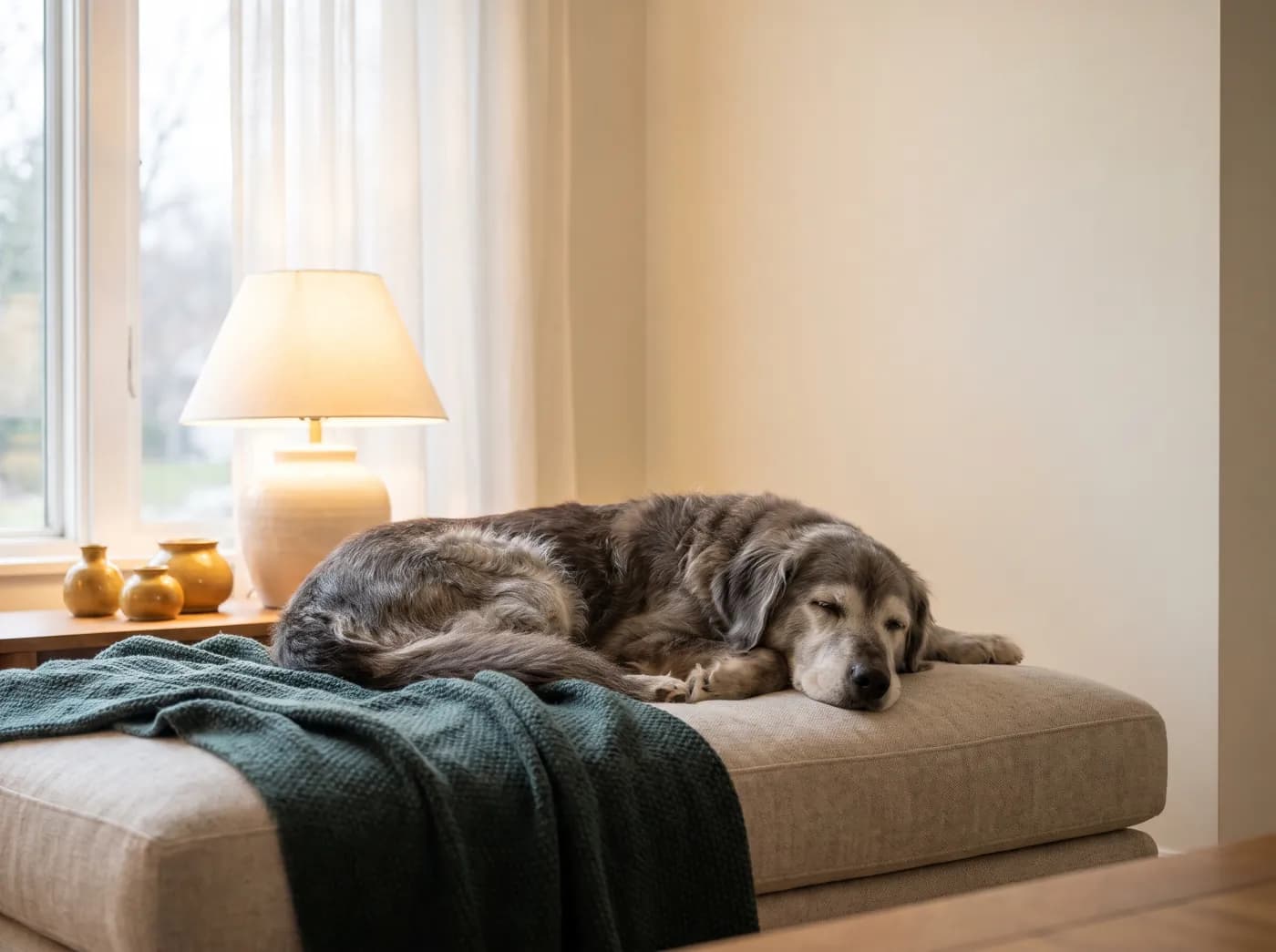
Why do senior dogs get restless at night?
Restlessness at night usually means something is making it hard for your dog to get comfortable or feel settled. The most common reasons are ordinary ones, and several can overlap.
- Discomfort: stiff joints or sore spots make lying down and staying put harder, so your dog gets up, circles and resettles.
- Bathroom needs: many older dogs need to go out more often, and a full bladder wakes them up.
- Fading senses: a dog who sees or hears less can startle easily or feel unsure in a dark room.
- A shifted body clock: some seniors nap more by day and are more awake at night. The American Animal Hospital Association's (AAHA) senior care guidelines list daytime sleeping and nighttime restlessness among the changes vets look into in older dogs.
- Too little to do: a dog who dozes all day with little activity may simply not be tired at bedtime.
- Temperature: older dogs are more sensitive to heat and cold, so a draft or a warm room matters.
How much sleep does a senior dog need?
The American Kennel Club (AKC) notes that most geriatric dogs need 12 to 15 hours of sleep a day, so plenty of napping is normal. What matters more is the pattern: when they sleep, how easily they settle, and whether that has changed.
Keep a simple log for a week or two. Note when your dog wakes at night, what they do (pace, pant, ask to go out, drink, stand and stare) and how long it lasts. Add meals, walks and anything new at home. This gives your vet useful detail and shows you which changes are helping.
What daily routine helps an older dog settle at night?
Dogs do best when they know what comes next. Cornell's Riney Canine Health Center says predictability is what seems to work best for unsettled dogs, and suggests scheduling meals, walks and play at consistent times, with rest time built in.
- Keep wake-up, meals, walks and bedtime at about the same times every day, weekends included.
- Keep your dog gently busy by day with short walks, sniffing games or a food puzzle, so daytime is for activity and night is for rest.
- If you can, avoid a long nap right before bed. A little light activity in the early evening helps.
- Feed dinner early enough that your dog has time to digest and go out before bed.
- Repeat the same short bedtime ritual each night: last trip outside, a calm word, lights down.
Do an evening walk and a late bathroom break help?
For many dogs, yes. A slow evening walk with lots of time to sniff uses both body and brain without overdoing it, and many dogs come home ready to rest. Keep the pace easy so it doesn't leave stiff joints sore at bedtime.
Make the last bathroom break as late as you reasonably can, and give your dog time, since older dogs can take longer to finish. If your dog still wakes to go out, keep the trip quiet and boring: out, back, straight to bed, no play.
If your dog suddenly needs to pee much more often, or is drinking more water than usual, tell your vet. That is a medical question, not a routine one.
How do I set up a calm, comfortable place to sleep?
Where and how your dog sleeps can make a real difference. AAHA's senior care guidelines suggest night lights, sound machines, temperature control and daytime sunlight among the simple changes that reduce stress for older pets at home.
- Bed: a supportive bed that stays firm, with a low edge that's easy to step into. AKC suggests orthopedic beds, which keep their shape, for dogs who need extra support.
- Location: a quiet spot out of drafts and foot traffic. Many seniors settle better near their people, so try moving the bed into or near your bedroom.
- Light: a plug-in night light along the route from bed to water bowl and door helps a dog with weaker eyes find their way.
- Sound: a fan or white-noise machine can mask outside noises that wake light sleepers.
- Floor: a non-slip rug beside the bed makes lying down and getting up feel steadier.
- Temperature: a cozy blanket in winter, a cooler spot in summer.
- Quiet hours: AKC suggests setting quiet hours in busy homes so an older dog can rest without being disturbed.
What should I do when my senior dog wakes up at night?
Stay calm and keep it low-key. Speak softly, keep the lights dim, and check the basics: does your dog need to go out, want water, or seem stuck or unsure where they are?
If they need the bathroom, take them out on a leash and come straight back to bed. If they've just woken and can't settle, a gentle hand and a quiet word beside their bed is often enough. Avoid play or snacks in the night, which can teach a dog that waking up is fun.
Never scold a dog for waking or for an accident. They aren't doing it on purpose, and stress makes settling harder. If night waking becomes a regular pattern, that's the moment to book a vet visit.
Can a calming chew help a senior dog at night?
If evenings are unsettled because of noise, visitors, storms or other changes at home, some owners add a calming chew to the routine. Chews made with ingredients like chamomile, valerian root, passionflower and L-theanine are designed to help dogs stay relaxed through unsettling moments.
A chew fits alongside routine and comfort, not instead of them. Talk to your vet before you start, especially if your dog takes any medicine, and follow the label. If the restlessness is new or getting worse, see your vet first rather than reaching for a supplement.
Never give your dog a human sleep aid or medicine unless your vet prescribes it. AAHA's guidelines warn that some melatonin products for people contain xylitol, which is dangerous for dogs.
From the Stay Calm shelf
Common questions
›Why is my senior dog pacing at night?
Pacing at night often comes from discomfort, a need to go out, fading eyesight or hearing, or a body clock that has shifted so your dog naps by day and is awake at night. It can also be a sign of pain or of changes in memory and awareness. Keep a short log of what happens and when, and share it with your vet, who can look for the cause.
›How many hours a day should an old dog sleep?
The American Kennel Club notes that most geriatric dogs need 12 to 15 hours of sleep a day, so lots of napping is normal for a senior. What deserves attention is a change: sleeping much more or less than usual, trouble settling, or being awake for long stretches at night. Changes like these are worth mentioning to your vet at your next visit, or sooner if they're sudden.
›Should I let my senior dog sleep in my bedroom?
Many older dogs settle better when they can sleep near their people, so moving the bed into or near your bedroom is worth trying. Put a supportive bed with a low edge in a draft-free corner, add a non-slip rug beside it, and use a night light so your dog can find the door. If your dog can't manage stairs, bring the bed down rather than carrying them up.
›Does a night light help an older dog?
It can. Dogs whose eyesight is fading may feel unsure or get stuck in a dark room, and AAHA's senior care guidelines include night lights among the simple home changes that reduce stress for older pets. Place a plug-in light along the route your dog takes at night, such as from the bed to the water bowl and the door.
›Can I give my old dog melatonin or a human sleep aid?
Don't give any human sleep aid or medicine unless your vet prescribes it. AAHA's senior care guidelines warn that some melatonin products contain xylitol, a sweetener that is dangerous for dogs, and that supplements can interact with medicines older dogs often take. Ask your vet whether anything is appropriate for your dog, and tell them about every supplement your dog already gets.
Not sure where to start?
Take the 60-second quiz to see your dog's age in human years and get a daily routine built around them.
Take the dog age quizSources
These statements have not been evaluated by the Food and Drug Administration. Kennara products are not intended to diagnose, treat, cure or prevent any disease, and they don't replace veterinary care.