Why Is My Senior Dog Slipping on the Floor? Fixes for Home
Updated November 6, 2026 · 6 min read
The short answer
Older dogs slip on smooth floors because they often have less muscle and slower balance than they used to, and long nails or fur over the paw pads cut their grip. Most homes can fix it with non-slip rugs on the main routes, regular nail and paw-fur trims, a ramp where they jump, and a lean weight. If the slipping is new or sudden, see your vet first.
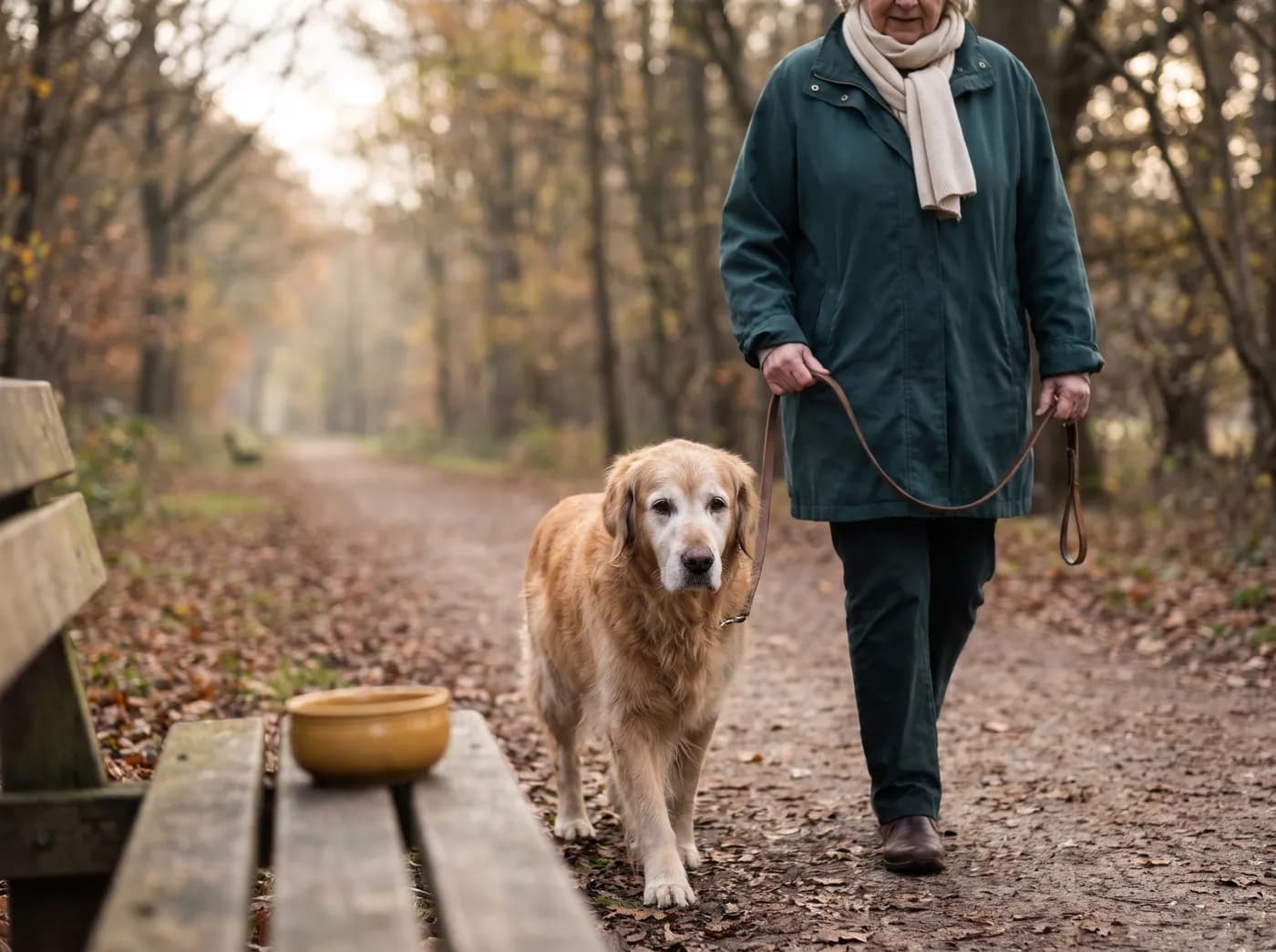
Why do older dogs start slipping on smooth floors?
Hardwood, tile and laminate give a dog's paws very little to hold on to. A young dog makes up for it with strong legs and quick reflexes. Many older dogs have less muscle in their back legs and react a little slower, so a small skid turns into splayed legs or a fall.
Their feet matter too. Nails that are too long push the toes up and lift the pads off the floor, and fur that grows over the pads acts like a sock on a polished floor. The American Kennel Club (AKC) notes that long nails can splay the foot and reduce traction.
Slipping can also be a sign that something hurts, or that strength or balance has changed. That is why a vet check comes first if it starts suddenly or gets worse quickly. The steps below are for the everyday slipping that comes with getting older.
Where should rugs and runners go first?
You don't need to carpet the whole house. Watch your dog for a day and note where they skid: usually the path from their bed to the water bowl, the route to the back door, and wherever they turn sharply or get up. Cover those spots first.
The American Animal Hospital Association's (AAHA) senior care guidelines for veterinary teams list yoga mats and carpet runners among the simple home changes that help older pets get around. If your dog stops and hesitates halfway across a room, that bare stretch is where your next rug goes.
- Pick rugs with a rubber or non-slip backing, or add a rug pad, so the rug itself doesn't slide.
- Make a continuous path. A gap of bare floor between two rugs is where many slips happen.
- Put a mat where your dog eats and drinks, since many dogs brace and splay at the bowl.
- Lay a mat beside the bed or couch so getting up starts on a surface with grip.
- Choose washable runners and keep them flat. A rug that bunches up becomes a trip hazard.
- Yoga mats and interlocking foam tiles work well for short stretches and are easy to move around.
How short should nails and paw fur be?
Start with a quick check while your dog stands on a hard floor. VCA Animal Hospitals advises that if the nails touch the ground, they're too long. Clicking on the floor as your dog walks is another sign.
AKC says most dogs need nail trims every three to four weeks. Dogs who walk less on rough pavement wear their nails down less, so many seniors need trims at the shorter end of that range.
Take off small bits at a time, especially with dark nails where you can't see the quick, the living part inside the nail. If trims are stressful for either of you, a groomer or your vet's team can do them.
Then look at the fur between and around the pads. If it covers the pads, trim it level with them using small round-tip scissors or a quiet clipper. Go slowly, reward often, and stop if your dog pulls away.
What does good paw care look like for a senior dog?
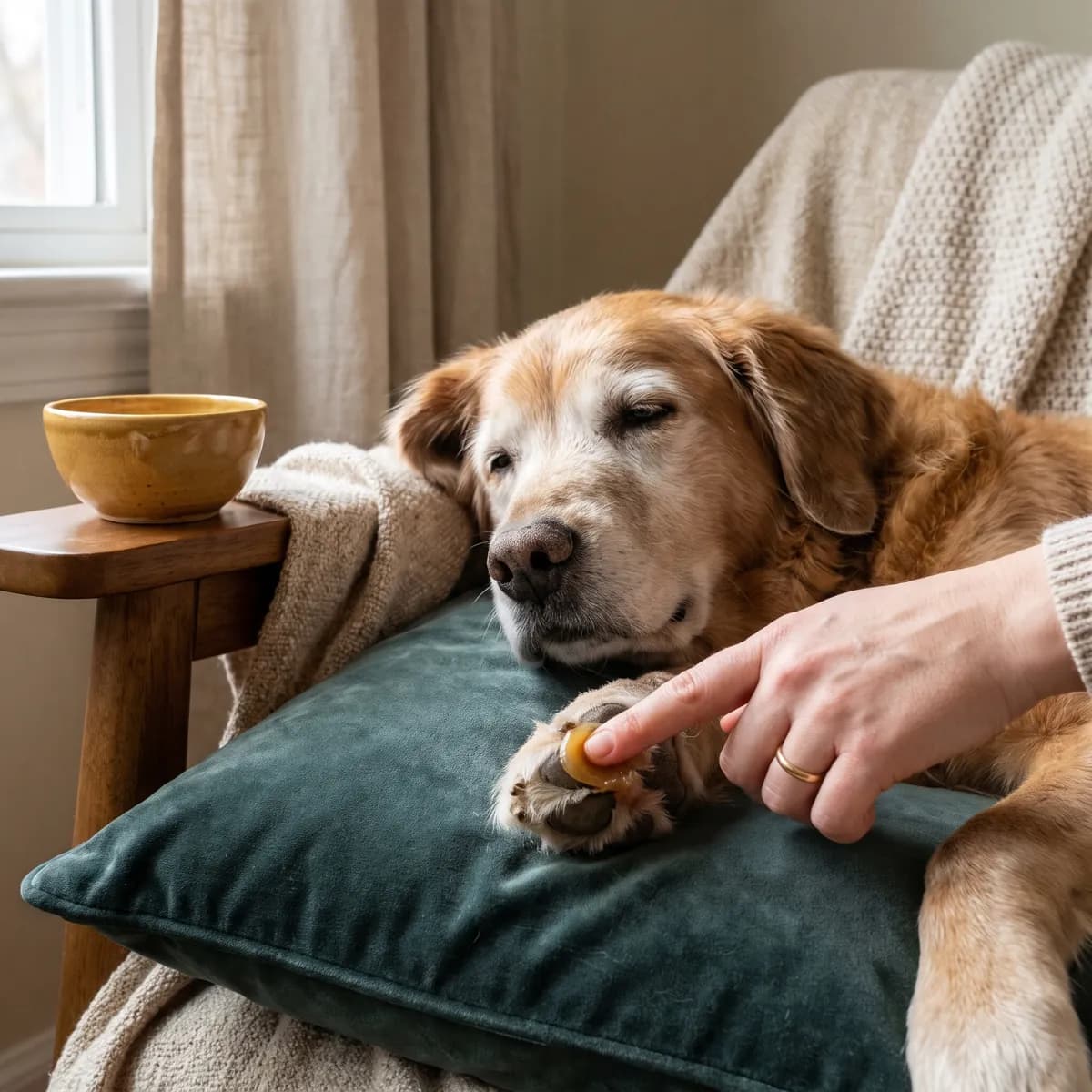
Paw pads are your dog's contact with the floor, so keep them clean and in good condition. Check them once a week for dryness, cracks, small cuts, or anything stuck between the toes.
After walks, wipe paws with a damp cloth to remove grit, salt or ice-melt, then dry between the toes. If pads look dry or rough, a lick-safe paw balm helps moisturize them and protect them from hot pavement, ice and road salt.
One caution: balm is for pad comfort, not grip. Apply it at bedtime or after the evening walk and let it soak in, or wipe off the excess, so your dog isn't crossing a smooth floor on freshly coated feet. If you want extra traction, ask your vet about dog boots or toe grips, which AAHA lists among mobility aids for seniors.
Do ramps, steps and gates help a dog who slips?
Yes, in the places that ask for a jump or a climb. A ramp or pet steps up to the couch, bed or car let your dog skip the push-off and the landing, which is where many slips and falls happen.
- Choose a ramp with a textured, non-slip surface and a gentle slope. A steep ramp can be harder than the jump.
- Teach the ramp at its lowest height first, with rewards, before you use it for the car or bed.
- Use a baby gate to block stairs or a slick room when you can't supervise.
- A support harness with a handle lets you steady your dog's back end on stairs or getting into the car.
- Keep floors clear of toys, cords and clutter, so there's less to scramble around.
Why does weight matter for slipping?
Every extra pound is more weight for older legs to hold steady on a slick surface, and heavier dogs often have a harder time getting up. Keeping your dog lean is one of the most useful things you can do for their mobility.
AAHA's senior care guidelines cite an ideal body condition score of 4.5 to 5 on a 9-point scale for dogs. In plain terms, you should be able to feel the ribs easily under a thin layer of fat and see a waist when you look down from above.
Ask your vet to score your dog at the next visit and suggest a target weight and how much to feed. Count snacks and table scraps too. Gentle daily movement, such as short walks on grass, helps keep the back legs in use.
From the Keep Moving shelf
Common questions
›Why is my old dog suddenly slipping on hardwood floors?
Sudden slipping usually means something has changed: long nails, fur over the paw pads, weaker back legs, or pain. Check the feet first, since nails that touch the floor and fur over the pads both reduce grip. If the feet look fine, or the slipping appeared within days, book a vet visit to look for pain, injury or changes in strength and balance before you rely on home fixes.
›Do rugs really help a senior dog with slippery floors?
Yes. Non-slip rugs, runners or yoga mats give paws something to grip on the routes your dog uses most, such as bed to water bowl and the path to the door. Use rugs with a rubber backing or a rug pad, avoid gaps of bare floor between them, and keep them flat so they don't turn into a trip hazard for your dog or for you.
›How often should I trim my senior dog's nails?
The American Kennel Club says most dogs need nail trims every three to four weeks, and older dogs who walk less on pavement often need them at the shorter end of that range. A simple check: if the nails touch the floor while your dog stands, or you hear clicking as they walk, they're too long. Trim small amounts at a time, or ask a groomer or your vet's team.
›Does paw balm stop a dog from slipping?
No. A paw balm is for pad comfort: it helps moisturize dry pads and protect them from hot pavement, ice and salt. It doesn't add grip, and a fresh coat can make paws slicker on smooth floors for a little while. Apply it at bedtime or after a walk and wipe off any excess. For traction, rely on rugs, trims and any aids your vet suggests.
›Can being overweight make my dog slip more?
Extra weight makes it harder for older legs to hold steady and push up from the floor, so heavier dogs often struggle more on slick surfaces. Ask your vet to check your dog's body condition and set a target weight and daily food amount. Count snacks and table scraps too, and keep up short, regular walks so the back legs stay in use.
Not sure where to start?
Take the 60-second quiz to see your dog's age in human years and get a daily routine built around them.
Take the dog age quizSources
These statements have not been evaluated by the Food and Drug Administration. Kennara products are not intended to diagnose, treat, cure or prevent any disease, and they don't replace veterinary care.